Antibody System Research Grade Vudalimab
Overview
This research-grade monoclonal modality is engineered as a humanized bispecific antibody designed to simultaneously target two prominent immune checkpoint receptors on T-lymphocytes: Programmed Cell Death Protein 1 (PD-1 / CD279) and Cytotoxic T-Lymphocyte-Associated Protein 4 (CTLA-4 / CD152). Both PD-1 and CTLA-4 serve as critical down-regulators of T-cell immune responses, albeit through distinct and complementary operational mechanisms. CTLA-4 acts primarily during the early priming phase of T-cell activation within secondary lymphoid organs by outcompeting the co-stimulatory molecule CD28 for binding to B7 ligands (CD80/CD86). Conversely, PD-1 functions predominantly during the structural effector phase within peripheral tissues and the tumor microenvironment, where interaction with its ligands (PD-L1/PD-L2) inhibits proximal T-cell receptor signaling.
By concurrently targeting both receptors on a single T-lymphocyte, this bispecific molecule delivers dual-checkpoint blockade synergy. This dual engagement prevents tumor-mediated immunosuppression, enhances T-cell receptor responsiveness, and promotes the selective expansion of tumor-infiltrating lymphocytes (TILs) with lower systemic toxicity compared to combination therapies utilizing separate monospecific anti-PD-1 and anti-CTLA-4 antibodies. Developed as a high-fidelity research-grade biosimilar based on clone XmAb-20717, vudalimab features a specialized asymmetric heterodimeric structure utilizing an Fc-engineered single-variable-chain configuration (half-IgG1-kappa joined with an scFv-kappa-heavy fusion on an altered h-CH2-CH3 domain). This platform serves as an essential analytical instrument for investigating dual-checkpoint inhibition mechanics, mapping receptor co-localization, and optimizing immunotherapy models across refractory solid tumors.
PRODUCT INFO
Key Features and Performance Metrics
-
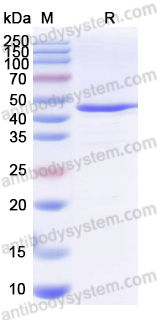
Refined Purity Profile: Exhibits an exceptional structural purity exceeding 95 percent, quantified and verified via Sodium Dodecyl Sulfate-Polyacrylamide Gel Electrophoresis (SDS-PAGE).
-
Uniform Working Concentration: Formulated at a precise stock concentration of 1 mg/ml to support direct in vitro functional assays, lymphocyte proliferation models, and serial titration layouts.
-
Asymmetric XmAb Architecture: Formatted with an advanced [half-IgG1-kappa/(scFv-kappa-heavy)-h-CH2-CH3] heterodimeric framework, incorporating specific Fc modifications to enforce correct heavy chain pairing and extend serum half-life while maintaining full bivalent binding avidity.
-
Validated Upstream Recovery: Isolated and polished using specialized Protein A/G affinity chromatography directly from cell culture supernatants to minimize processing contaminants.
Technical Specifications
-
Catalog No.: DHH02222
-
Targeted Biomarkers: PD-1 (Programmed cell death protein 1 / PDCD1) & CTLA-4 (Cytotoxic T-lymphocyte protein 4 / CTLA4)
-
Host Species: Humanized
-
Clonality: Monoclonal
-
Clone ID: Vudalimab (XmAb-20717)
-
Isotype: half-IgG1-kappa / (scFv-kappa-heavy)-h-CH2-CH3 Bispecific
-
Species Reactivity: Human
-
Accession Numbers: Q15116 (PD-1) & P16410 (CTLA-4)
-
Endotoxin Level: Batch-specific; please contact technical services for current certificate of analysis metrics.
Alternative Names: Bispecific PD-1 x CTLA-4, XmAb-20717, XMAB20717, Protein PD-1, hPD-1, PDCD1, CD279, CD152, Cytotoxic T-lymphocyte-associated antigen 4, CAS: 2329669-72-7.
Applications and Workflow Summary
This humanized bispecific molecule is highly optimized for performance as a research-grade biosimilar in downstream preclinical models. Investigators should observe the following guidelines:
-
Dilution and Layout: Optimal operational concentrations must be determined empirically based on specific assay configurations, such as mixed lymphocyte reactions (MLR), T-cell activation assays (measuring IL-2 or IFN-γ secretion), flow cytometry-based co-expression screening, or surface plasmon resonance (SPR) binding kinetics.
-
Matrix Suitability: Due to its simultaneous blockade mechanism, this construct is uniquely suited for characterization alongside independent anti-PD-1 or anti-CTLA-4 reference standards to evaluate competitive receptor binding profiles and receptor cross-linking phenomena in peripheral blood mononuclear cell (PBMC) co-cultures.
-
Handling Precautions: To prevent physical shear stress, chain dissociation, or structural degradation of the engineered asymmetric and scFv links, handle stock aliquots with care and centrifuge the vial briefly prior to opening.
Handling, Stability and Storage
-
Liquid Formulation: Supplied in a highly stable liquid format dissolved in 0.01M Phosphate Buffered Saline (PBS), pH 7.4.
-
Storage Guidance:
-
Short-Term Storage: Maintain at 4°C for standard short-term use (1 to 2 weeks).
-
Long-Term Storage: For intermediate storage up to 12 months, keep at -20°C. For extended long-term preservation, store at -80°C.
-
-
Operational Shelf Life: To prevent structural chain fragmentation and preserve functional bispecific binding capabilities across both alternative target arms, use a manual defrost freezer and strictly avoid repeated freeze-thaw cycles.
-