Antibody System Recombinant Neuraminidase (Sialidase)
Overview
This recombinant Neuraminidase (Sialidase) is a highly active exoglycosidase cloned from Clostridium perfringens and expressed in an optimized E. coli system. Neuraminidase functions as an indispensable analytical tool in glycobiology, proteomics, and clinical diagnostics. It catalyzes the precise removal of terminal sialic acid residues (N-acetylneuraminic acid) from a wide range of complex biological matrices, including oligosaccharides, glycolipids, and glycoproteins. The enzyme features a broad substrate specificity, effectively hydrolyzing alpha-2,3-, alpha-2,6-, and alpha-2,8-linked terminal sialic acids connected to galactose (Gal), N-acetylglucosamine (GlcNAc), N-acetylgalactosamine (GalNAc), acetylneuraminic acid (AcNeu), or glucosamine (GlcNeu).
The relative rate of enzymatic cleavage is determined on bonds in tri- and tetrasaccharides following the kinetic hierarchy: alpha-2,3 > alpha-2,8 = alpha-2,6. By removing these charged terminal sugars, the enzyme alters the overall molecular charge and mass of target glycoproteins, making it exceptionally useful for eliminating charge heterogeneity in therapeutic monoclonal antibodies. It is also widely deployed to desialylate serum proteins, such as transferrin, to isolate and analyze specific structural isoforms in human serum clinical profiles.
PRODUCT INFO
Key Features and Performance Metrics
-
Broad-Spectrum Linkage Hydrolysis: Efficiently targets alpha-2,3-, alpha-2,6-, and alpha-2,8-linked terminal residues, ensuring comprehensive desialylation across diverse complex glycan landscapes.
-
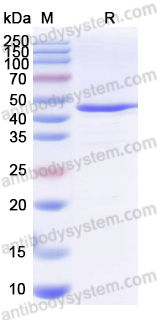
Refined Proteomic Purity: Exhibits a structural purity exceeding 90 percent, quantified and verified via Sodium Dodecyl Sulfate-Polyacrylamide Gel Electrophoresis (SDS-PAGE) to ensure a reliable background baseline free of interfering proteolytic contaminants.
-
Optimized Molecular Mass: Features a predicted recombinant molecular weight of 44.04 kDa, providing stable solution dynamics and predictable enzymatic diffusion profiles during digestion assays.
-
Enhanced Formulative Stability: Provided as a premium lyophilized powder formulated with specialized stabilizers, offering excellent shelf-life stability and flexible reconstitution concentration ranges.
Technical Specifications
-
Catalog No.: YXX09401
-
Enzyme Family: Exoglycosidase / Glycoprotein Amidase (Sialic Acid Specific)
-
Source Species: Clostridium perfringens
-
Expression System: E. coli
-
Nature: Recombinant
-
Predicted Molecular Weight: 44.04 kDa
-
Form: Lyophilized Powder
-
Validated Application: Desialylation of transferrin, isoform analysis, and general removal of terminal sialic acids from glycoproteins
-
Endotoxin Level: Batch-specific; please contact technical services for current certificate of analysis metrics.
Alternative Names: Sialidase, Exo-alpha-sialidase, Neuraminidase, nanH, EC 3.2.1.18.
Applications and Workflow Summary
This recombinant neuraminidase is highly optimized for downstream proteomic characterization and clinical isoform mapping. Investigators should observe the following guidelines:
Reconstitution Protocol
-
Reconstituent Selection: Always reconstitute the lyophilized powder in sterile, high-purity water to prepare your initial stock solution.
-
Mixing Technique: Swirl the vial gently until the cake or powder dissolves completely. Avoid vigorous vortexing or mechanical agitation to protect the active-site tertiary fold from structural denaturation.
-
Reference Documentation: A comprehensive, batch-specific copy of the datasheet is supplied with the product; please refer to it for exact volumetric recommendations and specific working concentrations.
Matrix Optimization and Control
-
Workflow Settings: Optimal enzyme-to-substrate ratios, exact operational buffer conditions, and total incubation durations vary based on steric availability and target density, and should be determined empirically by the investigator.
-
Handling Precautions: To maintain long-term enzyme activity, handle the reconstituted matrix with care, keep samples on ice during assay preparation, and briefly centrifuge the vial before opening to collect all content.
Handling, Stability and Storage
-
Lyophilization Buffer: Formulated and lyophilized from a stable matrix solution containing Phosphate Buffered Saline (PBS) pH 7.4, 0.02 percent NLS, 1mM EDTA, 4 percent Trehalose, and 1 percent Mannitol cryoprotectants.
-
Shipping Configurations: Distributed under secure, temperature-regulated parameters utilizing dry ice or chilled blue ice packs unless customized alternative shipping arrangements are established.
-
Storage Guidance:
-
Short-Term Storage: Store at 2 to 8 degrees C for immediate application needs (up to 1 week).
-
Long-Term Storage: For extended preservation, store the dry powder or properly aliquoted stock solution continuously at -20 to -80 degrees C for a stable framework spanning 12 months from the initial date of batch receipt.
-
-
Operational Shelf Life: To avoid physical stress, structural unfolding, or a sudden loss of exoglycosidase activity, utilize a manual defrost freezer and strictly avoid repeated freeze-thaw cycles.
-