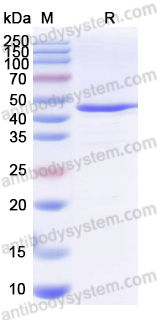
Antibody System Human sCD14 ELISA Kit
This enzyme-linked immunosorbent assay (ELISA) kit is engineered for the precise quantitative determination of soluble Cluster of Differentiation 14 (sCD14) concentrations in human serum, plasma, and cell culture supernatant samples. CD14 is a 55 kDa glycosylphosphatidylinositol (GPI)-anchored membrane glycoprotein primarily expressed on the surface of monocytes, macrophages, and neutrophils. It serves as a high-affinity co-receptor for lipopolysaccharide (LPS) complexed with LPS-binding protein (LBP), playing a critical role in initializing Toll-like receptor 4 (TLR4)-mediated innate immune responses against Gram-negative bacterial infections. Soluble CD14 (sCD14) is shed from the cell surface or secreted directly by hepatocytes as an acute-phase protein. Elevated circulating levels of sCD14 function as an important clinical biomarker for systemic inflammation, sepsis, microbial translocation, and various infectious or autoimmune pathologies. This high-performance sandwich ELISA kit provides an essential analytical platform for immunology researchers, clinical trial laboratories, and infectious disease investigators monitoring macrophage activation states, systemic endotoxemia kinetics, and innate host defense mechanisms.
PRODUCT INFO
Principle of the Assay
This assay utilizes a high-performance, solid-phase quantitative sandwich enzyme immunoassay technique to measure target protein levels:
-
Target Capture: A monoclonal antibody specific for Human sCD14 has been uniformly pre-coated onto the solid-phase surface of a 96-well microplate.
-
Specific Binding: Calibrated standards or unknown biological samples are pipetted directly into the microwells. Any endogenous Human sCD14 present in the sample matrix is securely bound and immobilized by the solid-phase capture antibody.
-
Sandwich Conjugation: Unbound matrix elements are removed via a thorough wash cycle. A biotin-labeled secondary antibody specific for Human sCD14 is introduced into the wells, anchoring onto an alternative epitope of the captured sCD14 target to establish a stable sandwich complex.
-
Enzyme Complexing: Following another wash step to clear away unbound detection antibody, Streptavidin conjugated to Horseradish Peroxidase (Streptavidin-HRP) is introduced to bind specifically to the biotinylated domains.
-
Signal Amplification and Readout: After a final wash to remove excess enzyme reagent, a colorimetric substrate solution is added to initiate enzymatic signal development. Because this is a traditional sandwich format, the resulting color intensity develops in direct proportion to the concentration of Human sCD14 bound in the initial step. The reaction is terminated with a stop solution, and absorbance is quantified spectrophotometrically.
Key Features and Performance Metrics
-
Refined Sensitivity Profile: Exhibits an analytical sensitivity down to 27.26 pg/mL, facilitating the accurate tracking of low-level sCD14 concentrations in diverse biological samples.
-
Linear Dynamic Range: Delivers a reliable quantitative range tracking from 93.75 pg/mL to 6,000 pg/mL to accommodate broad sample variation.
-
Rigorous Recovery Metrics: Validated with a target recovery range between 80 percent and 120 percent, indicating minimal matrix interference across verified human sample matrices.
-
Exceptional Precision Profile:
-
Intra-Assay Precision (Precision within an assay): <10% Coefficient of Variation (CV). Validated across three reference samples evaluated sixteen times on a single plate:
-
Sample 1: Mean = 2745.4 pg/mL, SD = 150.1, CV = 5.5%
-
Sample 2: Mean = 642.4 pg/mL, SD = 66.8, CV = 10.4%
-
Sample 3: Mean = 159.6 pg/mL, SD = 7.0, CV = 4.4%
-
-
Inter-Assay Precision (Precision between assays): <15% Coefficient of Variation (CV). Verified across three independent samples tested in twenty-four separate runs:
-
Sample 1: Mean = 2800.2 pg/mL, SD = 279.6, CV = 10.0%
-
Sample 2: Mean = 747.4 pg/mL, SD = 66.9, CV = 9.0%
-
Sample 3: Mean = 161.7 pg/mL, SD = 7.4, CV = 4.6%
-
-
Technical Specifications
-
Catalog No.: KHC33701
-
Assay Configuration: Quantitative Sandwich Enzyme Immunoassay
-
Targeted Biomarker: Human Soluble CD14 (sCD14)
-
Validated Matrices: Serum, Plasma, and Cell Culture Supernatant
-
Detection Method: Colorimetric
-
Assay Range: 93.75 to 6,000 pg/mL
-
Analytical Sensitivity: 27.26 pg/mL
-
Solid-Phase Target: Anti-Human sCD14 Specific Antibody
-
Detection Secondary Layer: Biotin-Anti-Human sCD14 / Streptavidin-HRP Conjugate
Alternative Names: Monocyte differentiation antigen CD14, Myeloid cell-specific leucine-rich glycoprotein, CD14.
Applications and Workflow Summary
This sandwich ELISA platform is highly optimized for high-throughput cytokine tracking, acute-phase response monitoring, and systemic inflammation profiling. Investigators should observe the following guidelines:
-
Dilution and Layout: Unknown serum, plasma, or supernatant matrices must be screened alongside the provided reference standards. Samples exhibiting target concentrations exceeding the maximum range of 6,000 pg/mL must be diluted empirically in standard assay matrix buffer prior to running the assay.
-
Analysis Requirements: To achieve absolute quantification accuracy, investigators must generate a standard curve simultaneously during every plate run, plotting standard absorbance profiles against log-transformed concentration values.
Handling, Stability and Storage
-
Kit Shipping: Distributed under secure, temperature-controlled conditions between 2 and 8 degrees Celsius to safeguard protein matrix and enzyme binding configurations.
-
Operational Shelf Life: Built with high-grade components to guarantee consistent, low-decay signal retention over a standard six-month framework, demonstrating an activity loss rate of less than 20 percent when kept at the manufacturer-specified storage parameters.
-
Storage Guidance: Keep the complete kit stored strictly at the recommended refrigeration temperature upon receipt. Ensure that unused microplate wells remain sealed within their original desiccant pouch to guard against moisture compromise.
-