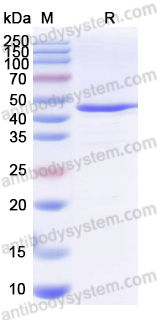
Antibody System Anti-Pan-pY / pTyr / Phosphotyrosine Antibody (4G10)
This monoclonal antibody specifically targets phosphotyrosine residues (pTyr or pY) independent of the surrounding amino acid sequence, acting as a broad-spectrum pan-specific detection reagent. Tyrosine phosphorylation is a cornerstone post-translational modification dynamically managed by protein tyrosine kinases (PTKs) and protein tyrosine phosphatases (PTPs). It serves as a vital molecular switch regulating cell growth, differentiation, cycle progression, and metabolic pathways, while its dysregulation is heavily implicated in oncogenesis and immune disorders. Generated from mouse hybridoma clone 4G10, this purified IgG2a kappa monoclonal antibody delivers excellent affinity and sharp specificity, making it an indispensable, highly reproducible tool for profiling the overall cellular phosphoproteome, mapping kinase activities, and isolating tyrosine-phosphorylated signaling complexes across all species networks.
PRODUCT INFO
Key Features and Specifications
-
Broad-Spectrum Universal Tracking: Formulated and validated to recognize sequence-independent phosphotyrosine targets across all biological kingdoms and cellular frameworks.
-
Phosphoproteome Marker: Functions as an exceptional diagnostic reagent for evaluating signal transduction pathways, kinase activation kinetics, and cellular oncogenic transformation profiles.
-
High Purity Profile: Verified at greater than 95 percent purity via SDS-PAGE evaluation, achieved through advanced Protein A/G affinity purification from cell culture supernatant.
-
Versatile Assay Performance: Validated across cornerstone laboratory methodologies, including Western Blotting (WB), Immunoprecipitation (IP), and Immunohistochemistry (IHC).
-
Ready-to-Use Formulation: Supplied at a concentration of 1.19 mg/ml in a stable 0.01M PBS (pH 7.4) liquid matrix to minimize compounding and formulation interference in downstream screening assays.
Technical Specifications
-
Catalog No.: RGK60101
-
Host Species: Mouse
-
Clone ID: 4G10
-
Clonality: Monoclonal
-
Isotype: IgG2a, kappa
-
Target Structure: Phosphotyrosine (Pan-pY / pTyr)
-
Concentration: 1.19 mg/ml
-
Species Reactivity: Broad-Spectrum / Species-Independent
-
Purification: Protein A/G chromatography
-
Form: Liquid solution
-
Storage Buffer: 0.01M PBS, pH 7.4
Alternative Names: Pan-phosphotyrosine, pTyr, pY, Phosphotyrosine-specific antibody, Clone 4G10.
Applications and Recommended Dilutions
This mouse monoclonal IgG2a antibody is highly suited for running quantitative tracking, spatial mapping, and affinity purification screens within global cellular signaling cascades. Investigators should utilize the following initial guidelines:
-
Western Blotting (WB): Optimized for global phosphoproteome profiling and resolving specific tyrosine-phosphorylated target bands in cellular lysates or tissue homogenates.
-
Immunoprecipitation (IP): Highly effective for pulling down tyrosine-phosphorylated target pools or isolating active kinase receptor complexes to investigate downstream interactomes.
-
Immunohistochemistry (IHC): Tailored for high-resolution spatial mapping of total tyrosine phosphorylation distribution trends across normal and neoplastic tissue architectures.
-
Note: Optimal working dilutions must be determined empirically by the end-user according to specific sample protein concentration profiles, cell stimulation protocols, and downstream detection systems.
Handling, Reconstitution and Storage
-
Shipping: Distributed under temperature-controlled conditions on blue ice or dry ice to safeguard antibody binding integrity upon arrival.
-
Handling: Ready for immediate use. To minimize structural degradation or contamination risks, it is highly recommended to dispense the liquid solution into single-use working aliquots upon initial receipt.
-
Storage Framework:
-
Short-Term: Store at 4 degrees Celsius for up to 1 to 2 weeks.
-
Medium-Term: Store at minus 20 degrees Celsius for up to 12 months from the date of receipt.
-
Long-Term: Store at minus 80 degrees Celsius in a manual defrost freezer for maximum long-term structural and molecular stability.
-
Note: Avoid repeated freeze-thaw cycles to protect the monoclonal antibody conformation from performance loss.
-
-