Antibody System Anti-HLA-A2-peptide (FMNKFIYEI) Complex Monoclonal Antibody (AMC
Overview
This specialized monoclonal antibody specifically targets the specific major histocompatibility complex (MHC) class I complex formed by the Human Leukocyte Antigen A2 (HLA-A2) molecule presenting the tumor-associated antigenic peptide fragment FMNKFIYEI. In cellular immunity, HLA-A2 presents endogenous peptide epitopes on the cell surface for surveillance by cytotoxic T lymphocytes (CTLs). The specific peptide sequence presented in this complex is a highly relevant epitope derived from Alpha-fetoprotein (AFP), an oncofetal glycoprotein typically suppressed after birth but frequently re-expressed and secreted at high levels in hepatocellular carcinoma (HCC) and certain germ cell tumors. Monoclonal antibodies that target specific peptide-MHC complexes with T-cell receptor-like (TCR-like) specificity serve as valuable instruments for directly validating specific antigen presentation trends, tracking tumor cell immune escape mechanisms, and evaluating targeted immunotherapies like CAR-T or bispecific T-cell engagers (BiTEs). Generated from mammalian expression systems using mouse hybridoma clone AMC-17, this purified IgG1 monoclonal antibody provides high-affinity, structural conformation-specific target recognition without binding to empty HLA-A2 molecules or alternative HLA-peptide configurations.
PRODUCT INFO
Key Features and Specifications
-
TCR-like Monoclonal Precision: Engineered from mouse clone AMC-17 to recognize a highly precise spatial conformation formed uniquely by the binding of the FMNKFIYEI peptide within the HLA-A2 groove.
-
Targeted Oncofetal Biomarker: Functions as an elite analytical tool for monitoring AFP-derived peptide presentation metrics on the surface of HLA-A2-positive neoplastic cells.
-
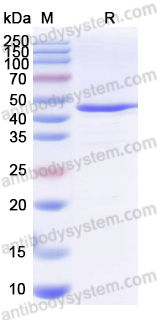
High Purity Profile: Verified at greater than 95 percent purity via SDS-PAGE evaluation, achieved through advanced Protein A/G affinity chromatography from cell culture supernatant.
-
Advanced Biophysical Validation: Optimized for precision screening frameworks, including Surface Plasmon Resonance (SPR) binding kinetics and Enzyme-Linked Immunosorbent Assays (ELISA).
-
High-Stability Liquid Matrix: Supplied at a concentration of 2.18 mg/ml in a ready-to-use 0.01M PBS (pH 7.4) matrix to minimize formulation interference in downstream cell-binding or solid-phase assays.
Technical Specifications
-
Catalog No.: RHM03036
-
Host Species: Mouse
-
Clone ID: AMC-17 (AMC17)
-
Clonality: Monoclonal
-
Isotype: IgG1
-
Target Complex: HLA-A2 presented FMNKFIYEI peptide complex
-
Accession Numbers: P04439 (HLA-A) and P02771 (AFP)
-
Species Reactivity: Human
-
Concentration: 2.18 mg/ml
-
Expression System: Mammalian Cells
-
Purification: Protein A/G chromatography
-
Form: Liquid solution
-
Storage Buffer: 0.01M PBS, pH 7.4
Alternative Names: Anti-HLA-A2-AFP peptide complex, HLA-A2-FMNKFIYEI complex specific antibody, TCR-like clone AMC-17.
Applications and Recommended Dilutions
This mouse monoclonal IgG1 antibody is highly suited for running quantitative tracking, complex-specific binding kinetics, and localized antigen presentation profiling within immuno-oncology and adoptive cellular therapy tracks. Investigators should utilize the following initial guidelines:
-
Enzyme-Linked Immunosorbent Assay (ELISA): Ideal for validating quantitative target capture arrays, screening soluble peptide-MHC multimer formulations, or solid-phase sandwich screening assemblies.
-
Surface Plasmon Resonance (SPR): Highly optimized for precise biophysical profiling, determination of affinity constants, and assessing off-target displacement kinetics against alternative peptide-MHC complexes.
-
Note: Optimal working dilutions must be determined empirically by the end-user according to specific cell surface antigen densities, transfection parameters, and instrumentation detection thresholds.
Handling, Reconstitution and Storage
-
Shipping: Distributed under temperature-controlled conditions on blue ice or dry ice to safeguard antibody binding integrity upon arrival.
-
Handling: Ready for immediate use. To minimize structural degradation or contamination risks, it is highly recommended to dispense the liquid solution into single-use working aliquots upon initial receipt.
-
Storage Framework:
-
Short-Term: Store at 4 degrees Celsius for up to 1 to 2 weeks.
-
Medium-Term: Store at minus 20 degrees Celsius for up to 12 months from the date of receipt.
-
Long-Term: Store at minus 80 degrees Celsius in a manual defrost freezer for maximum long-term structural and molecular stability.
-
Note: Avoid repeated freeze-thaw cycles to protect the monoclonal antibody conformation from performance loss.
-
-