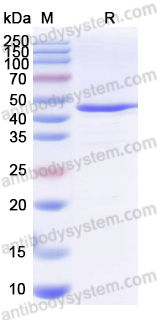
Antibody System Anti-DENV-2 E-DII / Envelope Protein E Antibody (2A10)
Overview
This monoclonal antibody specifically targets domain II of the envelope protein E (E-DII), a cornerstone structural component encoded within the genome polyprotein of Dengue Virus Serotype 2 (DENV-2) and closely related flaviviruses. The flavivirus envelope (E) protein is a class II viral fusion protein that drives both host cell receptor binding and low-pH-dependent membrane fusion within the endosome. Domain II specifically contains the highly conserved fusion loop peptide that inserts into the host endosomal membrane to initiate the structural rearrangements necessary for viral entry. Because of the evolutionary conservation of this structural pocket, this antibody exhibits exceptional broad-spectrum pan-flavivirus cross-reactivity, seamlessly recognizing Dengue Virus serotypes 1–4 (DENV1-4), Yellow Fever Virus (YFV), Zika Virus (ZIKV), and West Nile Virus (WNV). Generated from mammalian expression systems using human hybridoma clone 2A10, this purified IgG1 kappa monoclonal antibody serves as an invaluable, high-precision tool for investigating flavivirus entry mechanisms, broad-spectrum neutralization kinetics, cross-reactive diagnostic panels, and therapeutic intervention strategies.
PRODUCT INFO
Key Features and Specifications
-
Human Monoclonal Precision: Engineered from human clone 2A10 to deliver native-like target interactions, highly uniform binding kinetics, and clean signal-to-noise ratios without anti-species background interference.
-
Pan-Flavivirus Cross-Reactivity: Dual-validated to display broad target affinity across Dengue Virus serotypes 1, 2, 3, and 4, as well as Yellow Fever Virus, Zika Virus, and West Nile Virus models.
-
Conserved Fusion Loop Target: Specifically maps to structural domain II (E-DII) of the envelope protein, allowing investigators to track conformational fusion dynamics and entry inhibition landscapes.
-
Exceptional Purity Profile: Verified at greater than 95% purity via SDS-PAGE evaluation, achieved through advanced Protein A/G affinity purification from cell culture supernatant.
-
Versatile Assay Performance: Validated across cornerstone laboratory methodologies, including Western Blotting (WB), Immunohistochemistry (IHC), and Enzyme-Linked Immunosorbent Assays (ELISA).
-
High-Stability Liquid Matrix: Supplied at a concentration of 1.3 mg/ml in a ready-to-use 0.01M PBS (pH 7.4) matrix to minimize formulation interference in downstream screening frameworks.
Technical Specifications
-
Catalog No.: RVV04001
-
Host Species: Human
-
Clone ID: 2A10
-
Clonality: Monoclonal
-
Isotype: IgG1, kappa
-
Target Structural Subunit: Envelope Protein E Domain II (E-DII)
-
Accession Handles: B6DXD2, Q9Q4T1, Q99D35, Q99D35, Q9E100, P03314, Q6RVA2, A0A0X9QZM7
-
Species Reactivity: Dengue Virus (DENV1-4), Yellow Fever Virus (YFV), Zika Virus (ZIKV), West Nile Virus (WNV)
-
Concentration: 1.3 mg/ml
-
Expression System: Mammalian Cells
-
Purification: Protein A/G chromatography
-
Form: Liquid solution
-
Storage Buffer: 0.01M PBS, pH 7.4
Alternative Names: Genome polyprotein, Envelope protein E, E protein domain II, E-DII, Flavivirus major envelope protein.
Applications and Recommended Dilutions
This human monoclonal IgG1 antibody is highly suited for running quantitative tracking, cross-reactive expression profiling, and localized tissue screens within flavivirus pathogenesis and neutralization pathways. Investigators should utilize the following initial dilution guidelines:
-
Enzyme-Linked Immunosorbent Assay (ELISA): 1:4000 to 1:8000 dilution for pan-flavivirus target capture validation, antibody titration setups, or solid-phase sandwich assemblies.
-
Western Blotting (WB): 1:500 to 1:4000 dilution for resolving target envelope protein bands or tracking structural viral cleavage patterns under denaturing or non-denaturing conditions.
-
Immunohistochemistry (IHC): 1:50 to 1:100 dilution for high-resolution spatial mapping of viral antigen distribution and structural localization within infected cell sheets or tissue sections.
-
Note: Optimal working dilutions must be determined empirically by the end-user according to specific sample viral loads, cross-reactive target species parameters, and downstream detection systems.
Handling, Reconstitution and Storage
-
Shipping: Distributed under temperature-controlled conditions on blue ice or dry ice to safeguard antibody binding integrity upon arrival.
-
Handling: Ready for immediate use. To minimize structural degradation or contamination risks, it is highly recommended to dispense the liquid solution into single-use working aliquots upon initial receipt.
-
Storage Framework:
-
Short-Term: Store at 4 degrees Celsius for up to 1 to 2 weeks.
-
Medium-Term: Store at -20 degrees Celsius for up to 12 months from the date of receipt.
-
Long-Term: Store at -80 degrees Celsius in a manual defrost freezer for maximum long-term structural and molecular stability.
-
Note: Avoid repeated freeze-thaw cycles to protect the monoclonal antibody structure from activity loss.
-
-