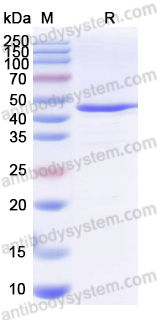
Antibody System Anti-Calreticulin / CALR Monoclonal Antibody (m1A04)
Overview
This monoclonal antibody specifically targets Calreticulin (CALR), an essential, highly conserved calcium-binding chaperone protein predominantly residing within the lumen of the endoplasmic reticulum (ER). Also recognized as ERp60, CRTC, Calregulin, grp60, or CRP55, Calreticulin fulfills critical physiological activities by ensuring proper folding of synthesized glycoproteins, modulating intracellular calcium homeostasis, and regulating gene expression. Beyond the ER, translocation of Calreticulin to the cell surface acts as a critical "eat me" pro-phagocytic signal, driving immunogenic cell death (ICD) dynamics in various cancer pathways. Somatic mutations in the CALR gene are also highly relevant biomarkers in myeloproliferative neoplasms (MPNs), such as essential thrombocythemia and primary myelofibrosis. Generated from mouse hybridoma clone m1A04 using a recombinant human CALR immunogen, this purified IgG2a monoclonal antibody provides exceptional specificity and reproducibility for exploring ER stress networks, calcium signaling mechanics, and immuno-oncology markers.
PRODUCT INFO
Key Features and Specifications
-
Monoclonal Precision: Engineered from mouse clone m1A04 to deliver uniform binding kinetics, excellent signal-to-noise ratios, and strict selectivity for human Calreticulin.
-
Chaperone and ICD Biomarker: Serves as an exceptional tool for evaluating glycoprotein quality control, intracellular calcium modulation, and cell-surface translocation kinetics during immunogenic cell death.
-
High Purity Profile: Refined via advanced Protein A/G affinity chromatography from cell culture supernatant to eliminate non-specific immunoglobulins and cultural contaminants.
-
Versatile Assay Performance: Validated across a broad multi-assay framework, including Western Blotting (WB), Immunohistochemistry (IHC), Immunofluorescence (IF), Flow Cytometry (FCM), and Enzyme-Linked Immunosorbent Assays (ELISA).
-
High-Stability Liquid Matrix: Supplied as a ready-to-use liquid solution in a stable 0.01M PBS (pH 7.4) matrix fortified with 0.05% Proclin 300 to ensure reliable long-term shelf life.
Technical Specifications
-
Catalog No.: MHD75201
-
Host Species: Mouse
-
Clone ID: m1A04
-
Clonality: Monoclonal
-
Isotype: IgG2a
-
Immunogen: Recombinant Human Calreticulin/CALR
-
Accession Number: P27797
-
Species Reactivity: Human
-
Purification: Protein A/G chromatography
-
Form: Liquid solution
-
Storage Buffer: 0.01M PBS, pH 7.4, 0.05% Proclin 300
Alternative Names: Calreticulin, CALR, ERp60, CRTC, Calregulin, grp60, HACBP, Endoplasmic reticulum resident protein 60, CRP55.
Applications and Recommended Dilutions
This mouse monoclonal IgG2a antibody is highly suited for running quantitative, localized, and profile expression screens within calcium signaling networks, ER stress pathways, and oncology profiling. Investigators should utilize the following initial dilution guidelines:
-
Western Blotting (WB): 1:500 to 1:2000 dilution for evaluating target expression bands in cellular lysates or tissue homogenates.
-
Enzyme-Linked Immunosorbent Assay (ELISA): 1:1000 to 1:10000 dilution for target capture validation or solid-phase detection assemblies.
-
Immunohistochemistry (IHC) & Immunofluorescence (IF): Tailored for high-resolution mapping of spatial protein distribution and subcellular localization (such as luminal ER tracking or cell surface exposure).
-
Flow Cytometry (FCM): Ideal for tracking surface translocation kinetics or intracellular profiling in B-cell and tumor lineages.
-
Note: Optimal working dilutions must be determined empirically by the end-user according to specific sample concentration profiles, instrument laser thresholds, and experimental parameters.
Handling, Reconstitution and Storage
-
Shipping: Distributed under temperature-controlled conditions on blue ice or dry ice to safeguard antibody binding integrity upon arrival.
-
Handling: Ready for immediate use. To minimize structural degradation or contamination risks, it is highly recommended to dispense the liquid solution into single-use working aliquots upon initial receipt.
-
Storage Framework:
-
Short-Term: Store at 4 degrees Celsius for regular, frequent laboratory applications.
-
Long-Term: Store at -20 degrees Celsius in a manual defrost freezer for up to 12 months from the date of receipt.
-
Note: Avoid repeated freeze-thaw cycles to protect the monoclonal antibody structure from performance loss.
-
-