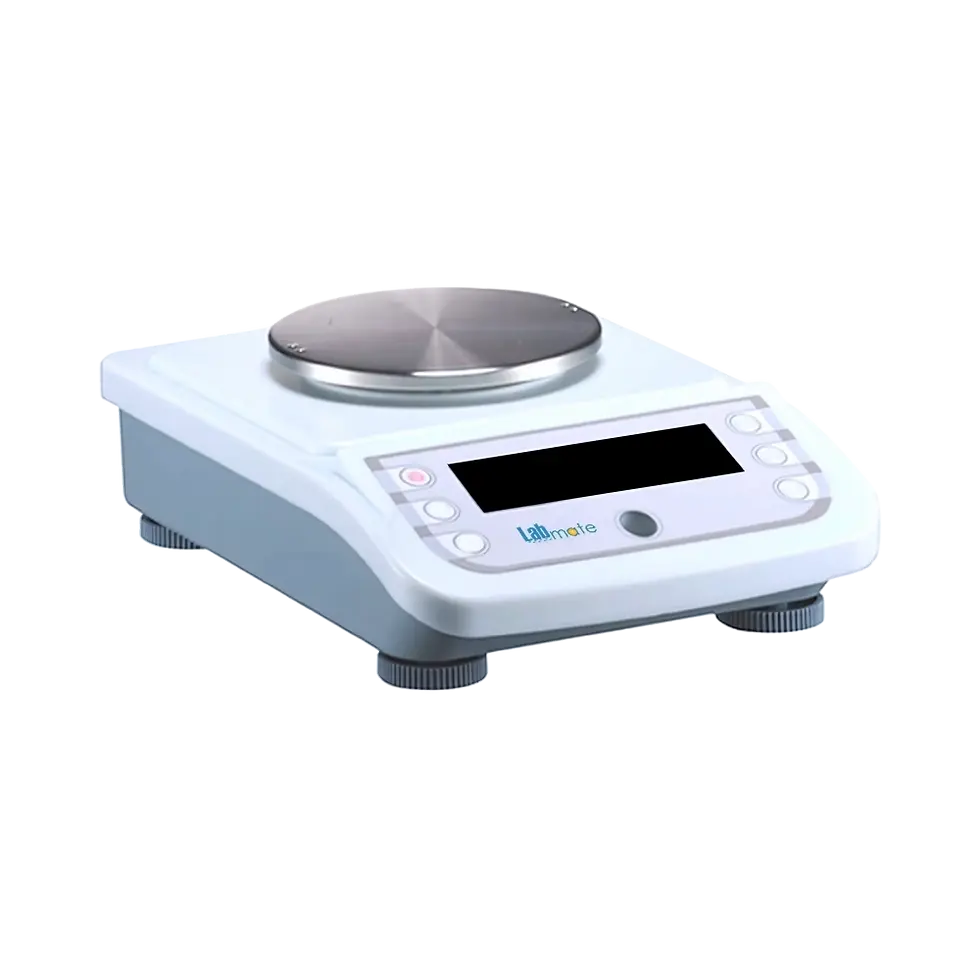
Labmate Gene Electroporator LMGE-A100
The Labmate Gene Electroporator LMGE-A100 is a specialized high-performance system designed to deliver precise electrical pulses that create temporary pores in cell membranes, facilitating the entry of DNA, RNA, and other genetic materials. Controlled by an advanced microcomputer, it generates an exponential decay waveform with adjustable RC time constants to optimize transfection efficiency. Whether working with microorganisms, animal cells, or plant tissues, the LMGE-A100 offers a versatile range of voltage, capacitance, and resistance settings to handle large-scale cell hybridization and gene silencing protocols with ease.
Product Info
Technical Specifications
-
Model Number: Labmate Gene Electroporator LMGE-A100
-
High Output Voltage: 401 to 3000 V
-
Low Output Voltage: 50 to 400 V
-
High Voltage Capacitor: 10, 25, 35, 50, and 60 μF
-
Low Voltage Capacitor: 50 to 1560 μF (in 25 μF steps)
-
Resistance Settings: 50 to 1650 Ω (in 50 Ω steps)
-
Operation System: Microcomputer control
-
Output Waveform: RC time constant exponential decay
-
Safety Mechanisms: Integrated electrical hazard protection
-
Net Dimensions: 400 x 300 x 200 mm
-
Packaging Dimensions: 580 x 360 x 250 mm
-
Weight: 5.5 kg
Key Features
-
Exponential Waveform Precision: Generates a consistent exponential decay output, allowing for the fine-tuning of RC time constants to match specific cell membrane requirements.
-
Intelligent Network System: Features real-time parameter measurement and control, ensuring that electrical pulses are delivered with absolute accuracy.
-
Dual-Way Communication: Supports networking of gene importation systems with two-way communication functions for enhanced data exchange and multi-unit coordination.
-
Microprocessor-Controlled Accuracy: Utilizes advanced microprocessor technology to manage complex voltage and capacitance combinations, ensuring repeatable results across every session.
-
High-Throughput Capability: Specifically designed to transfect a large quantity of cells in a very short timeframe once optimum conditions are established.
-
User-Friendly Interface: Equipped with a man-computer dialog interface that simplifies protocol setup for researchers and technicians.
-
Comprehensive Safety Design: Includes built-in safety mechanisms to protect the operator and sensitive biological samples from electrical surges or hazards.
Applications
-
Cell Electroporation: Creating temporary pores in microorganisms, animal, and plant cells for genetic transformation.
-
Gene Silencing: Facilitating the entry of siRNA or miRNA into cells to study gene function and knockdown effects.
-
Cell Hybridization: Aiding in the fusion of different cell types for the production of hybridomas or specialized cell lines.
-
Genetic Engineering: High-efficiency transfection of DNA or RNA vectors into primary cells and difficult-to-transfect cell lines.
-
Microbiological Research: Enhancing the transformation efficiency of bacterial and yeast cells in molecular biology workflows.
-